

Knee Replacement Costs 2026: Why ‘Make in India’ Implants are Now Outperforming Imports

For years, imported knee implants were seen as the gold standard in India. Patients and surgeons alike often favored brands from the US or Europe, assuming superior quality justified the hefty price tag. However, 2026 marks a significant turning point. Driven by government initiatives, technological advancements, and stricter quality controls, ‘Make in India’ orthopedic implants are not just competing – they are often outperforming their international counterparts, especially concerning value.
What is the total cost of knee replacement surgery in India in 2026?”
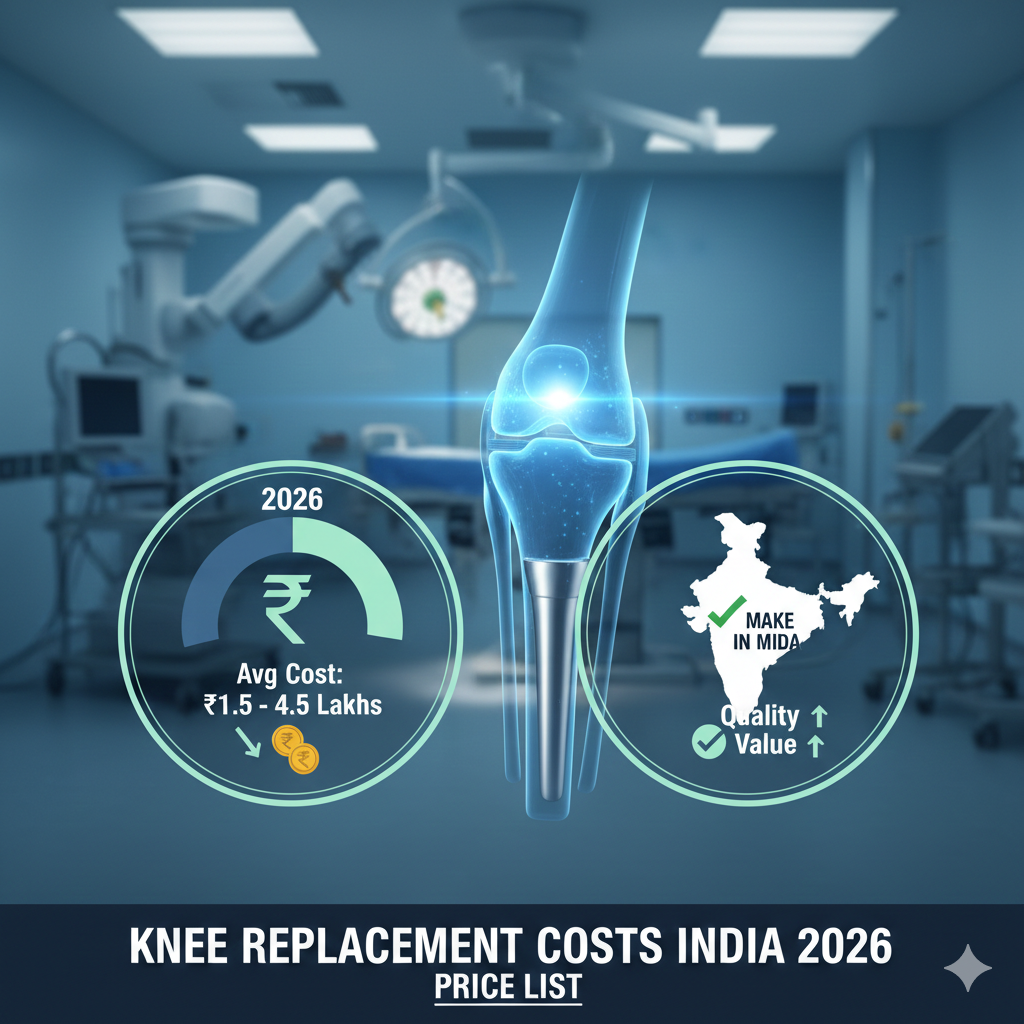
- In 2026, the total cost of knee replacement surgery in India typically ranges from ₹1.5 Lakhs to ₹4.5 Lakhs per knee in private hospitals. This includes the implant, surgeon’s fee, and hospital stay. Government-subsidized costs can be as low as ₹70,000 to ₹1 Lakh.
Understanding 2026 Knee Replacement Costs in India
The cost of knee replacement surgery in India has become more transparent, thanks to the National Pharmaceutical Pricing Authority (NPPA) caps. While prices vary by city and hospital (Tier 1 vs. Tier 2 cities), a typical unilateral knee replacement (one knee) can range from ₹1.5 Lakhs to ₹3.5 Lakhs for the implant, with hospital charges adding another ₹80,000 to ₹1.5 Lakhs. Bilateral (both knees) procedures naturally double these figures. The crucial point here is that these caps apply to all implants, domestic or imported, leveling the playing field significantly.

Philips HeartStart FRx AED Defibrillator
Philips HeartStart FRx treats sudden cardiac arrest by delivering a life-saving shock to restore heart rhythm.
Knee replacement surgery cost in India 2026
| Implant Type | Estimated Cost (2026) | Best For |
| Indian (Make in India) | ₹40,000 – ₹90,000 | Budget-conscious / High Quality |
| Standard Imported | ₹1,20,000 – ₹1,80,000 | International Brand Trust |
| Premium (Oxinium/Gold) | ₹2,00,000 – ₹3,50,000 | Young Patients / High Activity |
‘Make in India’: A New Era of Quality and Innovation
The perception that ‘affordable’ means ‘lower quality’ is rapidly changing. Indian manufacturers like Meril Healthcare, Tynor, and Siora Surgicals have invested heavily in R&D, bringing state-of-the-art implants to the market.
Bangalore’s premium partner for hospital turnkey projects and advanced medical equipment.
Visit Official Site- Customization: Indian patients often have different anatomical needs. Local manufacturers are excelling in creating patient-specific implants.
- Advanced Materials: Using new alloys and coating technologies that enhance longevity and reduce infection rates.
- Robotics Integration: Many ‘Make in India’ implants are designed for seamless compatibility with robotic-assisted surgery systems, leading to better outcomes and faster recovery.
Does health insurance cover robotic knee replacement in India?”
- Most comprehensive health insurance policies in India now cover robotic-assisted knee replacement, though some may have a “co-payment” or a cap on the technology fee. It is generally classified under “Modern Treatments” with a waiting period of 2–4 years for pre-existing arthritis.
The Advantage: Why Domestic Implants are a Smarter Choice
- Cost-Benefit: With NPPA caps, domestic implants offer comparable (or sometimes superior) technology at a more accessible price point for hospitals and patients.
- Availability & Logistics: No more waiting for imports, ensuring timely surgeries.
- Local Expertise: Surgeons often work closely with Indian manufacturers, providing feedback that leads to continuous improvement and region-specific innovations.
- Government Support: The ‘Atmanirbhar Bharat’ (Self-Reliant India) push has fostered a robust ecosystem for medical device manufacturing, guaranteeing stringent quality checks.
Hospital Turnkey Project Costs in Bangalore
Learn the step-by-step process, NABH compliance, and ROI estimates for building 30 to 100-bed hospitals.
Read the Full GuideMaking an Informed Decision for Your Knee Replacement
When considering knee replacement surgery in 2026, it’s essential to discuss all implant options with your orthopedic surgeon. Ask about the material, expected lifespan, and the track record of both imported and ‘Make in India’ brands. The landscape has evolved, and opting for a high-quality domestic implant can now mean better value without compromising on clinical outcomes.
How long do knee implants last in 2026?”
- Modern knee implants used in 2026, including both Indian and imported varieties, are designed to last 20 to 25 years, provided the patient follows post-operative physiotherapy and avoids high-impact activities like running or jumping.
Key Takeaways for Patients and Surgeons
- Research: Understand the specific features of different implants.
- Consult: Always seek multiple opinions on implant choices.
- Quality First: Prioritize implant quality and surgeon experience over brand origin.
In conclusion, the Indian orthopedic implant market has matured, offering world-class solutions right at home. The future of knee replacement in India is not just affordable, but also highly advanced and ‘Made in India.
What are the best Indian knee implant brands to consider?
Why is there a price difference between ‘Make in India’ and imported implants?
Is robotic knee surgery more expensive than traditional surgery?
Can I walk immediately after a knee replacement?
What are the hidden costs of knee replacement surgery?