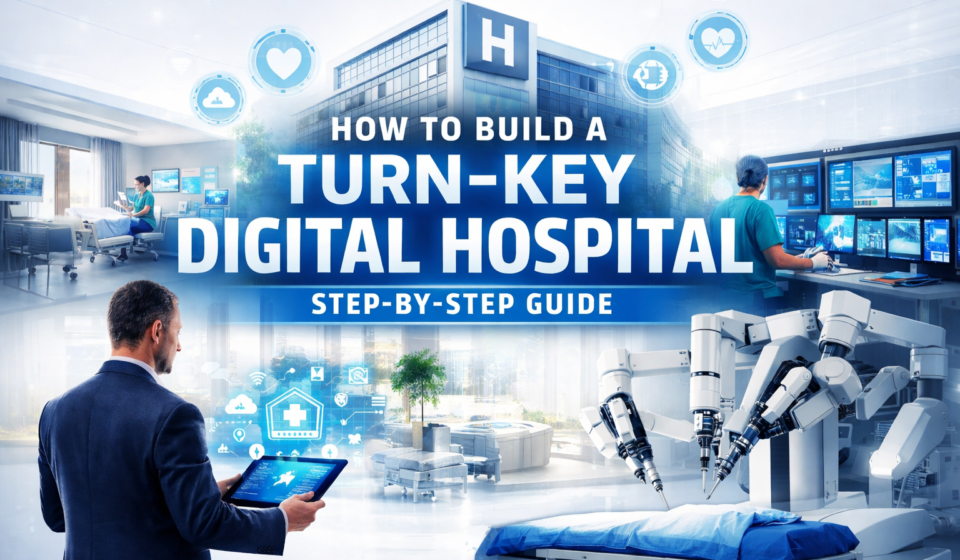

The Evolution of Healthcare Infrastructure and the Rising Demand for Turn-Key Facility Solutions in 2026
The healthcare sector is in the midst of a significant transformation driven by technological advancements, demographic shifts, and evolving patient expectations. With a growing emphasis on digital health and the integration of advanced technologies, hospitals are increasingly seeking turn-key solutions to streamline their operations, improve care delivery, and maintain a competitive edge in the market. As we look ahead to 2026, the demand for turn-key digital hospital solutions is expected to rise dramatically, with hospitals looking to create interconnected, tech-driven facilities that can meet the needs of modern healthcare.
A turn-key digital hospital goes beyond just the physical infrastructure; it involves integrating cutting-edge IT systems, digital tools, and operational workflows into a seamless, ready-to-operate package. This concept offers numerous advantages for hospital administrators and healthcare executives, including reduced time-to-market, improved operational efficiency, and a future-proof solution that meets evolving healthcare trends and regulations.
This step-by-step guide will walk you through the process of building a turn-key digital hospital, highlighting key trends, strategic considerations, and the top digital hospital solutions for 2026.
The Strategic Importance of Turn-Key Solutions
The healthcare industry faces numerous challenges, from managing staff shortages to navigating administrative complexities and fragmented workflows. Turn-key digital hospital solutions are designed to address these challenges by offering a comprehensive, all-in-one approach that integrates technology, infrastructure, and services into a single package.
1. Addressing Staff Shortages
One of the most pressing concerns for hospitals in 2026 is the ongoing shortage of healthcare professionals. Turn-key solutions can help mitigate these challenges by incorporating automation and AI-driven technologies to support staff in tasks like patient monitoring, data entry, and administrative work. These technologies can significantly reduce the burden on staff, allowing them to focus on patient care rather than administrative duties.
2. Reducing Administrative Burdens
Turn-key solutions can simplify administrative tasks by integrating healthcare IT systems, such as Electronic Health Records (EHR), Hospital Information Systems (HIS), and Patient Management Systems (PMS). By streamlining workflows and automating routine tasks, hospitals can reduce overhead costs, improve accuracy, and enhance the overall patient experience.
3. Overcoming Fragmented Workflows
Many hospitals still operate with fragmented systems, leading to inefficiencies, communication gaps, and delays in care delivery. A turn-key digital hospital integrates systems across departments, allowing for smooth interoperability between care teams, departments, and locations. This ensures a more coordinated, efficient approach to patient care.
Top 10 Turn-Key Solutions for 2026
As we look towards 2026, here are the top 10 turn-key solutions that will shape the future of hospital infrastructure:
1. Smart Inpatient Wings: Integrated IoT and EHR Interoperability
Inpatient wings equipped with Internet of Things (IoT) devices and fully integrated EHR systems can enhance patient monitoring, reduce errors, and improve treatment outcomes. IoT devices, such as wearable sensors and connected medical equipment, provide real-time data to physicians, enabling them to make informed decisions quickly. This integration also allows for better coordination between care teams and faster responses to changes in a patient’s condition.
2. Rapid-Deploy Outpatient Clinics: Scaling Footprints in Urban and Suburban Areas
With the growing demand for outpatient care, rapid-deploy clinics that can be easily scaled across urban and suburban areas are essential. These clinics leverage cloud-based systems, telemedicine, and digital appointment scheduling to provide patients with quick and easy access to healthcare services. A turn-key solution can quickly deploy the necessary infrastructure, allowing hospitals to expand their reach and reduce patient wait times.
3. Hybrid Surgical Suites: Combining Imaging and Surgery for High-Tech Adoption
Hybrid surgical suites integrate advanced imaging technologies such as MRI, CT, and ultrasound with surgical equipment in a single operating room. This allows surgeons to perform minimally invasive procedures with real-time imaging, improving patient outcomes and reducing recovery times. Hybrid suites are becoming increasingly important as hospitals adopt high-tech solutions for precision surgery.
4. Modular Specialized Care Units: Scalable Solutions for Aging Populations and Chronic Care
As the global population ages and the prevalence of chronic conditions rises, modular specialized care units are a flexible and cost-effective way to meet these demands. These units can be quickly deployed and customized to provide specialized care for patients with specific needs, such as cardiology, orthopedics, or neurology. The ability to scale these units based on demand allows hospitals to remain agile and responsive to shifting patient needs.
5. Digital Front-Door Facilities: Streamlining Patient Intake and Discharge Efficiency
A digital front-door facility enhances the patient experience by streamlining the intake and discharge processes. Automated kiosks, digital check-ins, and integrated systems that provide real-time updates on wait times and patient status can reduce delays and improve patient satisfaction. These solutions also improve hospital efficiency by automating administrative tasks and reducing the workload on front-line staff.
6. Green-Ready Healthcare Hubs: Sustainability and Long-Term ROI
Sustainability is a growing focus in healthcare infrastructure. Green-ready healthcare hubs integrate energy-efficient systems, renewable energy sources, and waste-reduction technologies to minimize the environmental impact of hospital operations. These facilities not only reduce operational costs but also offer a long-term ROI by aligning with global sustainability goals and improving the hospital’s public image.
7. Comprehensive Diagnostic Centers: Turn-Key Labs for Faster Decision-Making
Comprehensive diagnostic centers equipped with state-of-the-art imaging, pathology, and lab services allow for quicker and more accurate decision-making. Turn-key diagnostic solutions integrate all necessary equipment, IT systems, and workflow processes into a single, easy-to-manage solution. This enables hospitals to reduce diagnostic delays and improve the speed at which patients receive critical care.
8. Integrated Home-Health Command Centers: Enhancing Remote Care Coordination
With the increasing importance of remote care, integrated home-health command centers offer hospitals the ability to manage and monitor patients outside of the traditional hospital setting. These centers provide real-time updates on patient health, facilitate communication between home healthcare providers and hospital teams, and allow for early intervention when necessary. This integration improves the continuity of care and reduces hospital readmissions.
9. Compliance-First Facility Designs: Meeting Strict 2026 Regulatory and Audit Standards
In 2026, regulatory compliance will continue to be a top priority for hospitals. Turn-key solutions are designed with compliance in mind, ensuring that hospitals meet the latest healthcare standards, including data privacy, patient safety, and environmental regulations. These designs integrate automated compliance tracking, audit trails, and reporting systems to simplify regulatory adherence.
10. Multi-Specialty Wellness Pavilions: Enhancing Patient Satisfaction and Holistic Care
Multi-specialty wellness pavilions provide a holistic approach to patient care by offering services such as preventive health, mental health support, nutrition counseling, and rehabilitation. These centers focus on improving the overall well-being of patients, not just treating illness. A turn-key solution for wellness pavilions integrates various healthcare services into a cohesive, patient-centered model, enhancing patient satisfaction and retention.

Philips HeartStart FRx AED Defibrillator
Philips HeartStart FRx treats sudden cardiac arrest by delivering a life-saving shock to restore heart rhythm.
Contact Medasus Healthcare today to discuss how we can help you implement a turn-key digital hospital solution that aligns with your hospital’s goals, reduces operational costs, and improves patient outcomes.
Get in Touch with Medasus Healthcare
Let’s transform your healthcare facility for the future—together.
Navigating the Transition: Key Considerations for Hospital Administrators
Building a turn-key digital hospital is a significant investment that requires careful planning and execution. Here are some key considerations for hospital administrators to keep in mind during the transition:
1. Strategic Alignment with Hospital Goals
Before embarking on a digital transformation, it’s essential to align your turn-key solution with the hospital’s long-term strategic objectives. Ensure that the technology, infrastructure, and services you implement will support the hospital’s vision for growth, patient care, and financial sustainability.
2. Involve Stakeholders Early
Involving key stakeholders—such as clinicians, IT teams, and administrators—early in the decision-making process ensures that the solution meets the needs of all departments. Collaboration during the planning phase can help identify potential challenges and ensure a smooth implementation process.
3. Focus on Interoperability
To ensure a seamless experience for patients and staff, prioritize systems that support interoperability. Ensure that electronic health records (EHR), hospital information systems (HIS), and other digital tools can communicate with one another, allowing for more efficient workflows and improved patient outcomes.
4. Consider Scalability and Flexibility
The healthcare landscape is constantly evolving, and your hospital’s needs will change over time. Choose turn-key solutions that are scalable and flexible, allowing for future upgrades or adjustments without requiring significant infrastructure overhauls.
5. Measure ROI and Efficiency Gains
When evaluating turn-key solutions, consider both the upfront costs and the long-term return on investment (ROI). The right solution should lead to measurable improvements in hospital efficiency, such as reduced patient wait times, streamlined workflows, and improved patient satisfaction, as well as reduced operational costs.
6. Ensure Compliance and Security
As digital health systems become more integrated, ensuring that your hospital meets all regulatory requirements and maintains data security is paramount. Work with vendors who understand the regulatory landscape and can help ensure compliance with the latest healthcare standards.
Conclusion
Building a turn-key digital hospital in 2026 is an ambitious but achievable goal that will position your hospital at the forefront of healthcare innovation. By implementing the right technologies and integrating systems into a cohesive, all-in-one solution, hospitals can improve patient care, streamline operations, and achieve long-term sustainability. With careful planning and a focus on strategic alignment, hospital administrators can navigate the transition to a fully digital hospital and unlock the numerous benefits that come with it, from operational efficiency to improved patient outcomes and regulatory compliance.